Feeds:
Posts
Comments

I recently felt the urge to find my Eagle Scout neckerchief…and when I did I also found my dad’s and my brother’s.  There are all sorts of Eagle Scout neckerchiefs out there ranging from BSA National-issue to homemade.  The three neckerchiefs shown below are in between — modifications of standard Troop neckerchiefs.  In each case ribbon has been added to the edge of the neckerchief to add a red, white and blue/Eagle Scout effect.  On the latter two, the words “Eagle Scout” and the year the award was earned is embroidered above the troop logo.  I like the understated look of the neckerchiefs.   In chronological order:

Jack Lewis, 1962, Troop 299, Asbury Methodist Church, Prairie Village Kansas

Eric Lewis, 1988, Troop 86, First United Methodist Church, Olathe, Kansas
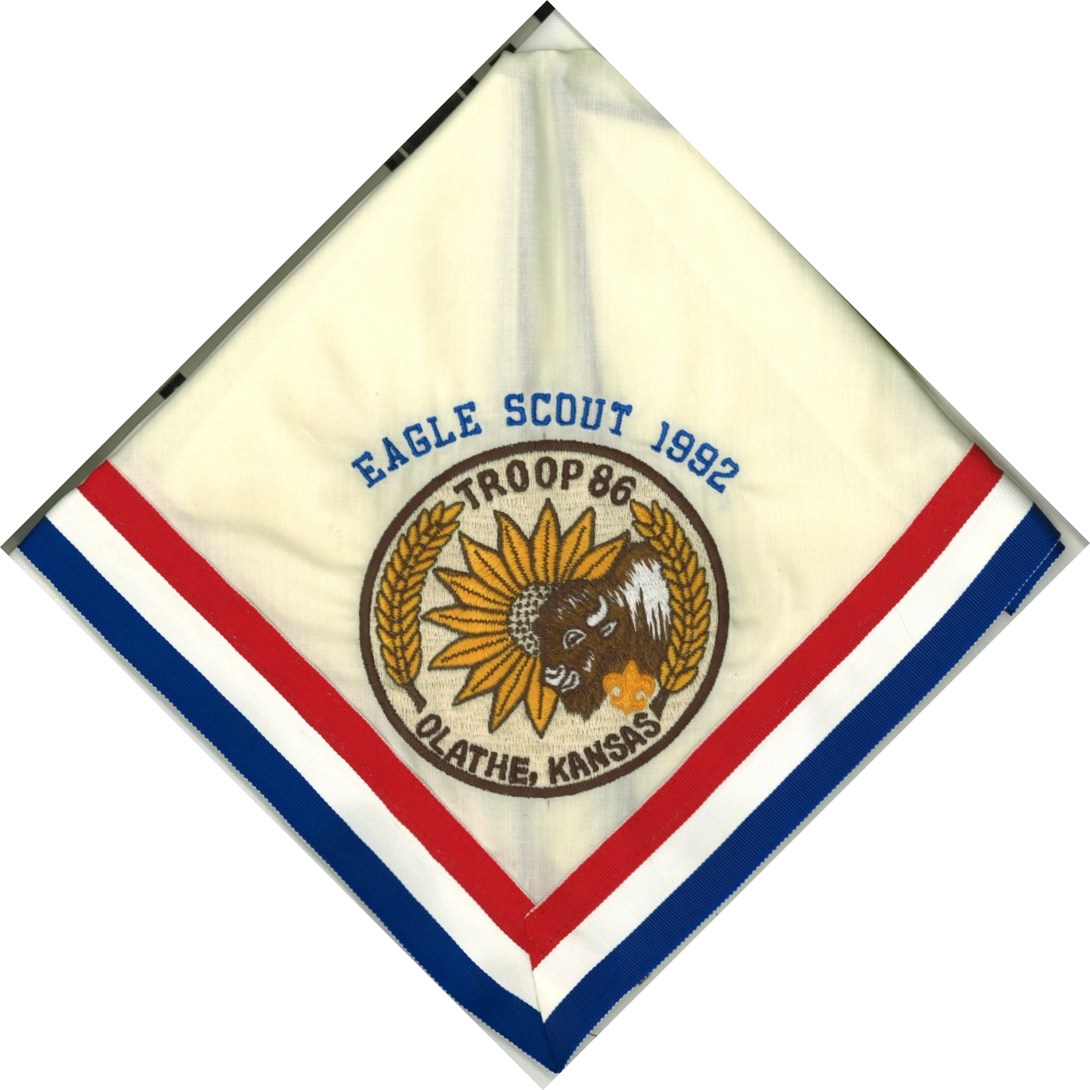
Kory Lewis, 1992, Troop 86,First United Methodist Church, Olathe, Kansas

What does your troop use to honor Eagle Scouts?   If you have an Eagle Scout neckerchief from the Kansas City area that you would like to share, send me a picture and any pertinent information (year earned, troop location, Scout’s name) and I’ll post it.
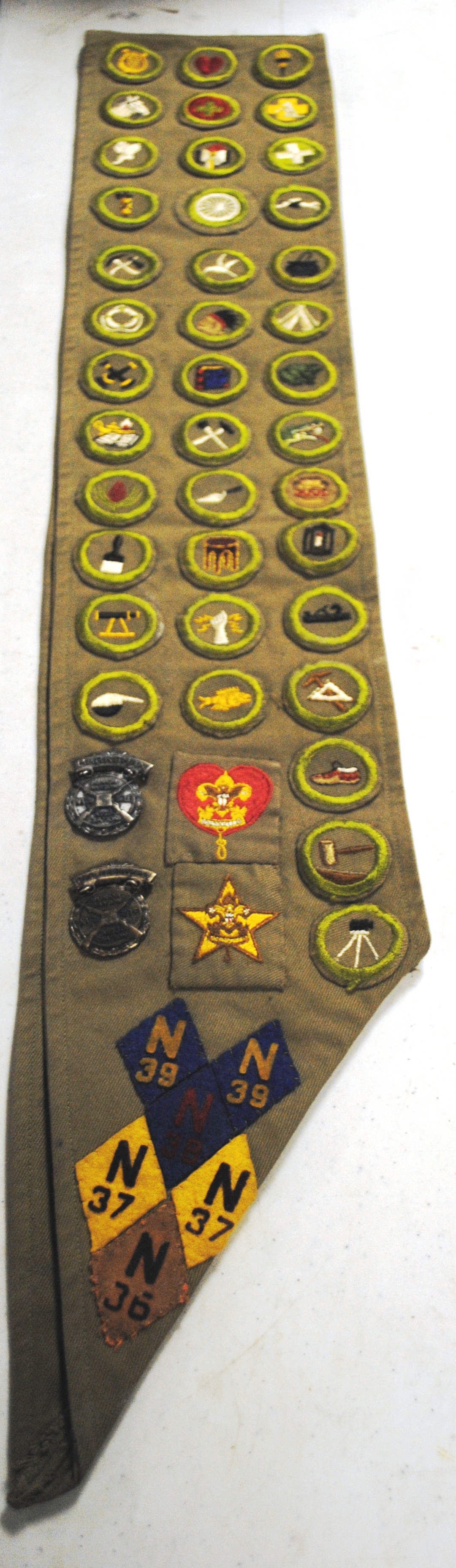
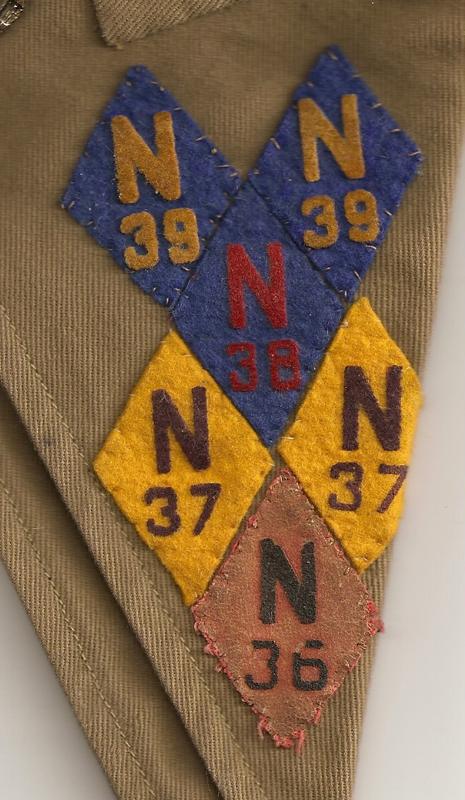
An area collector recently found an amazing sash with a connection to Camp Naish on an a popular online auction service.  Shown below, is the sash with six Camp Naish felt diamonds (one from 1936, two from 1937, one from 1938 and two from 1939).  Based on my knowledge, there were between 8 and 12 total diamonds in local collections prior to this find…the fact that this sash has six is truly astonishing. 

I saw the sash first hand at Tamegonit Lodge’s Vigil Banquet this year and it is in great condition.  As I previously posted here, there was a gap at year 1938…until now.  As shown in the picture below, the 1938 diamond is shown with blue felt and red text.  Additionally, it is interesting to note that the Scout apparently attended for two sessions in 1937 and 1939. 

So the next questions to answer are:  are there more sashes like this out there?  Is there a diamond for 1935?  1941?

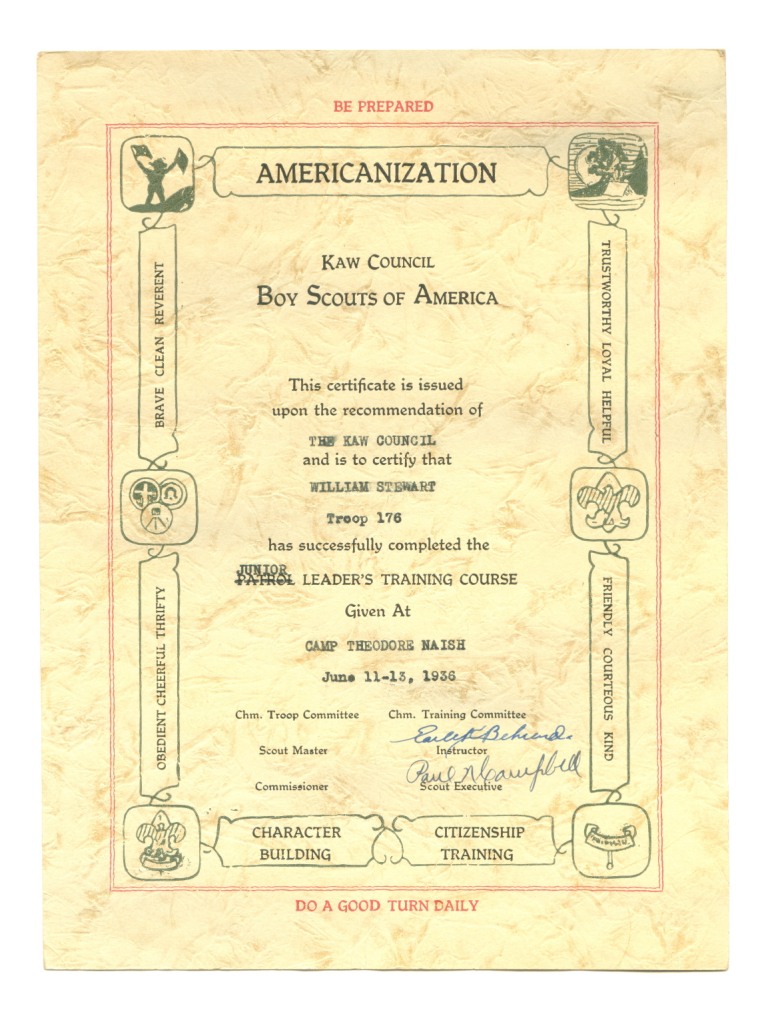
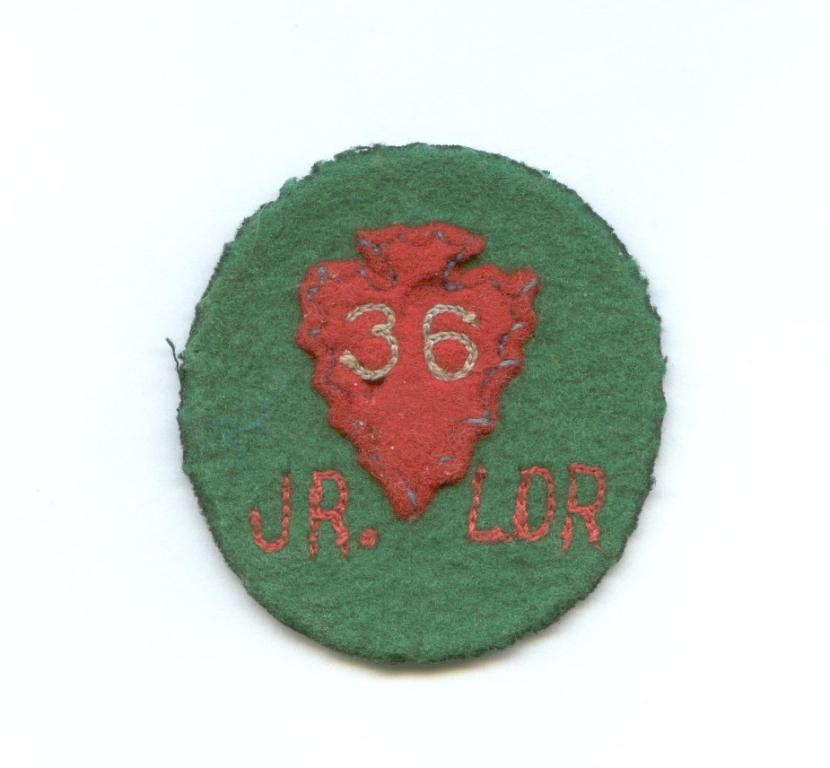
A good friend and scout memorabilia collector, Mike S. passed along the following images. First is a certificate of completion for a Junior Leader’s Training Course held at Camp Naish on June 11-13, 1936.  He picked the item up from an online auction site with the accompanying felt patch shown below.  The certificate is signed by Earle Berhend, Instructor and early figure in Camp Naish history.   Both the certificate and patch are in great condition.  Nice find, Mike.  Thanks for sharing!

Note:  I’ve heard a similar patch was made in 1934, but haven’t seen an image…keep your eyes peeled!

1936 Junior Leader Training Certificate

1936 Felt Junior Leader Training Patch

A Fake?

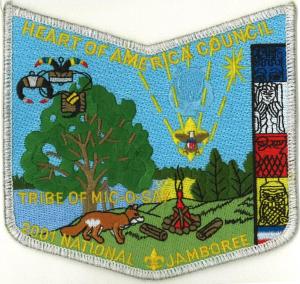
Two piece sets have become commonplace with OA issues for national events (NOAC and Jamboree).  They typically include a lodge flap and a lower chevron that continues the flap design.  Some lodges get pretty clever with their designs, you can do a search on eBay and turn up a variety of examples.  Tamegonit Lodge/Tribe of Mic-O-Say/Heart of America council have jointly produced two sets for recent National Jamborees (2001 and 2005).  In the case of the 2001 set, a fake of the lower chevron has surfaced.  Pictured below are the two patches.  The one on the left is the original, while the one on the right is the fake. 

 YX1 - RealZX1 - Fake

The easiest way to tell the difference is by looking at the Mic-O-Say claws on the left hand side of the patch.  The original patch has black claws, while the fake has silver-mylar claws. 

The fakes show up on eBay fairly regularly, keep an eye out.  There are no apparent differences between the companion OA flap and the flap commonly sold with the fake chevron.

Here’s an interesting flea market find:  a 1941 Boy Scout Round Up neckerchief from Kansas City.  According to “Trail to Eagle:  Six Decades of Scouting in Kansas City 1910-1970,”  Kansas City began hosting annual Boy Scout Round Ups in 1912.  The book states that it was an indoor event intended to showcase Boy Scout skills (pioneering, first aid, firebuilding, etc.) and that the Kansas City event was the first of its kind held indoors. 

The neckerchief is a standard-issue Boy Scout neckerchief with a stencil/block print on top.  It could have been made on site and available to the boys or possibly made by a troop to wear during the event.  I’ve never seen an item similar to this but would enjoy seeing a picture of yours if you have one.

1941 Kansas City Boy Scout Round Up

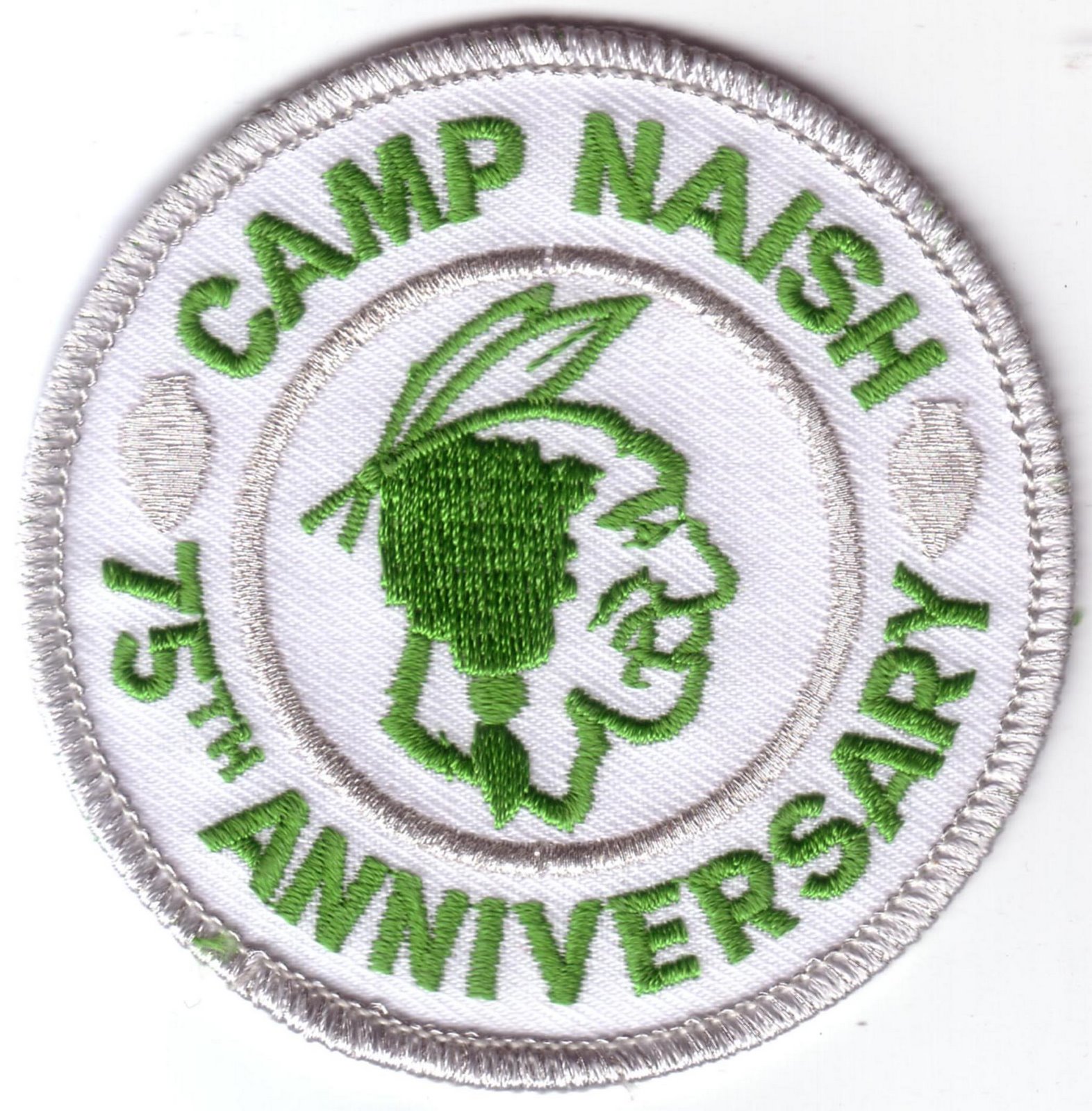
As I posted previously, I was on the organizing committee for the Camp Naish 75th Anniversary celebration held on June 30, 2001. I helped make arrangements for the memorabilia display in the South Camp Dining Hall. In addition to my collection, Mike Schieders, Gene Tuley, and Jim McDuff (and others that I might have forgotten) all brought out their displays to share with those in attendance.

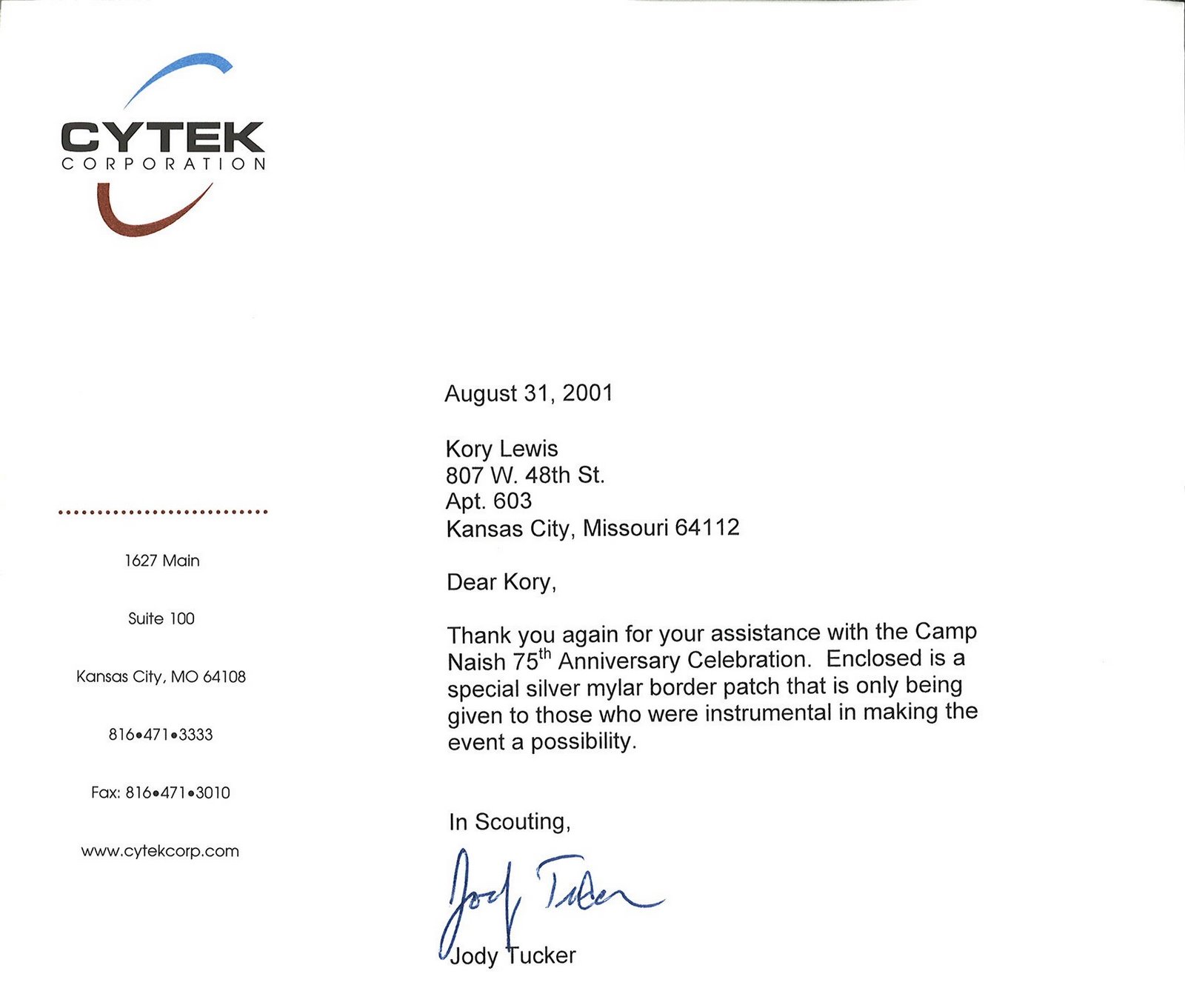
As a special thank you, I received a limited-run silver mylar version of the 75th Anniversary patch. Here is an image of it along with a letter from Jody Tucker, who was the chair of the committee. I am not sure how many of these were made, but there were about a dozen of us on the committee.


Click for a Larger View of the letter

It was a great event and I look forward to celebrating more anniversaries at Camp Naish.

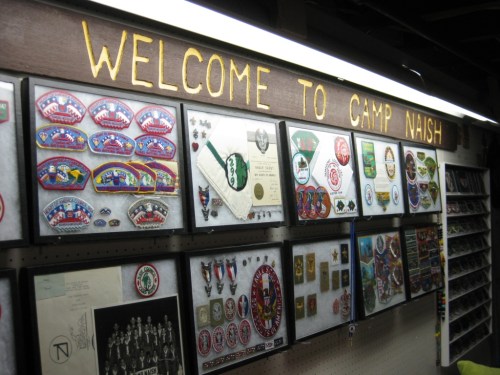
While flea markets and estate sales are good places to find some local scouting memorabilia, you probably won’t find a Camp Naish sign like this in one of those venues:

Museum

While working as a volunteer ranger at Camp Naish in the 1990s, my dad saved this from the dumpster/scrap pile when the covered information board/bench structure was removed from the end of the Central Camp parking lot. The base of the structure had rotted, so the whole thing was taken down.   He happened to be at the right place at the right time and saved it from destruction.   It is about 8.5 feet long and has the ubiquitous brown and yellow paint scheme from Camp Naish.

This hangs in what we playfully call “the Museum.”  Also pictured is a display of Scouting memorabilia including my Tamegonit Lodge collection (at far right), my dad’s Eagle Scout certificate and medal, my brother’s Eagle Scout medal and my Eagle Scout medal, and my dad’s troop’s summer camp picture at Camp Naish from 1960.

This makes me think of the old sign at the entrance to Camp Naish (I think Bartle had one too) that said something to the effect of., “SLOW DOWN. One boy’s life is worth all your time.”

Did that make it to the burn pile or is it hanging in your basement?

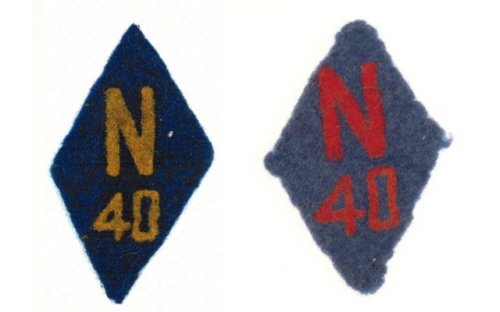
A couple of weeks ago I posted about the early felt diamond patches used for Camp Naish.  In gathering images for that post, I found two different types for 1940.  As shown below, there is a navy blue version with yellow text and a blue/grey version with red text.

40-diamond-comparison

Considering there are very few of these known to exist, it is remarkable that there are two different versions from one year.  If you have any information about these patches, please contact me.

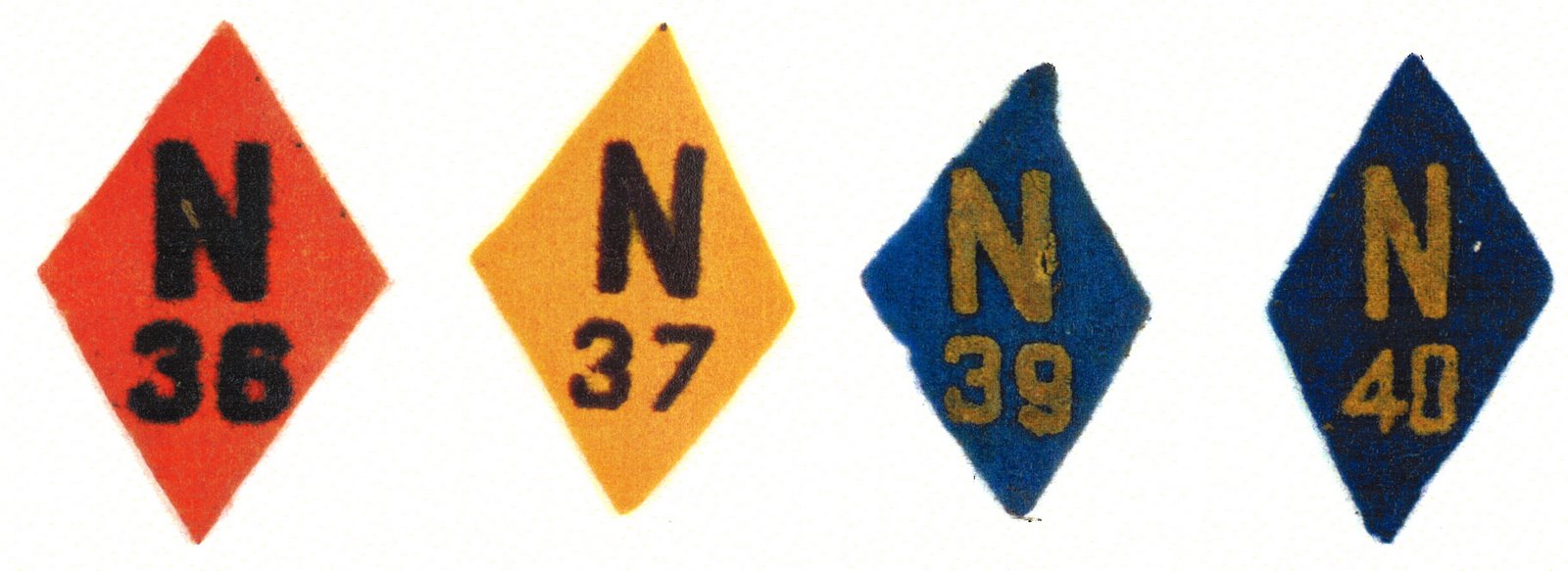
Previously I wrote about a felt star patch used by Troop 7 for Camp Naish attendance in 1934. At some point in the following years Camp Naish issued its first camp patch. The early patches are simple diamond-shaped patches with an N and a two digit year. Here are some examples:

Note that the images (scanned from Patches of Camp Theodore Naish, Andy Dubill) shown are not consecutive in year (missing 38).

This begs the following questions:

  • Was a patch issued for 1938? UPDATE – see: A Missing Piece to the Puzzle
  • Was a patch issued in 1935? Or earlier?
  • If so, what color are they?
  • The earliest year-dated rocker that I have seen is 1945. What was the last year that the felt diamonds were used?I don’t personally have one of these patches, but would like to add at least one to my collection. I have seen several wonderful examples on campimages.com and campnaish.org, both on uniforms and off. If you have a spare, let me know.
  • Kansas Sea Scouting

    A while back I posted about the S.S.S. Kansan and its success in the national flagship competitions in the early 1930s.  Mike Erickson over at scoutingkansas.org, has more information about the ship and its Skipper, Dr. William C. Menninger.  It is an interesting read with images of some of the early Sea Scout manuals for Skippers. Check it out!